

Contacts

92 Bowery St., NY 10013

thepascal@mail.com

+1 800 123 456 789

Category: Knowledge Hub

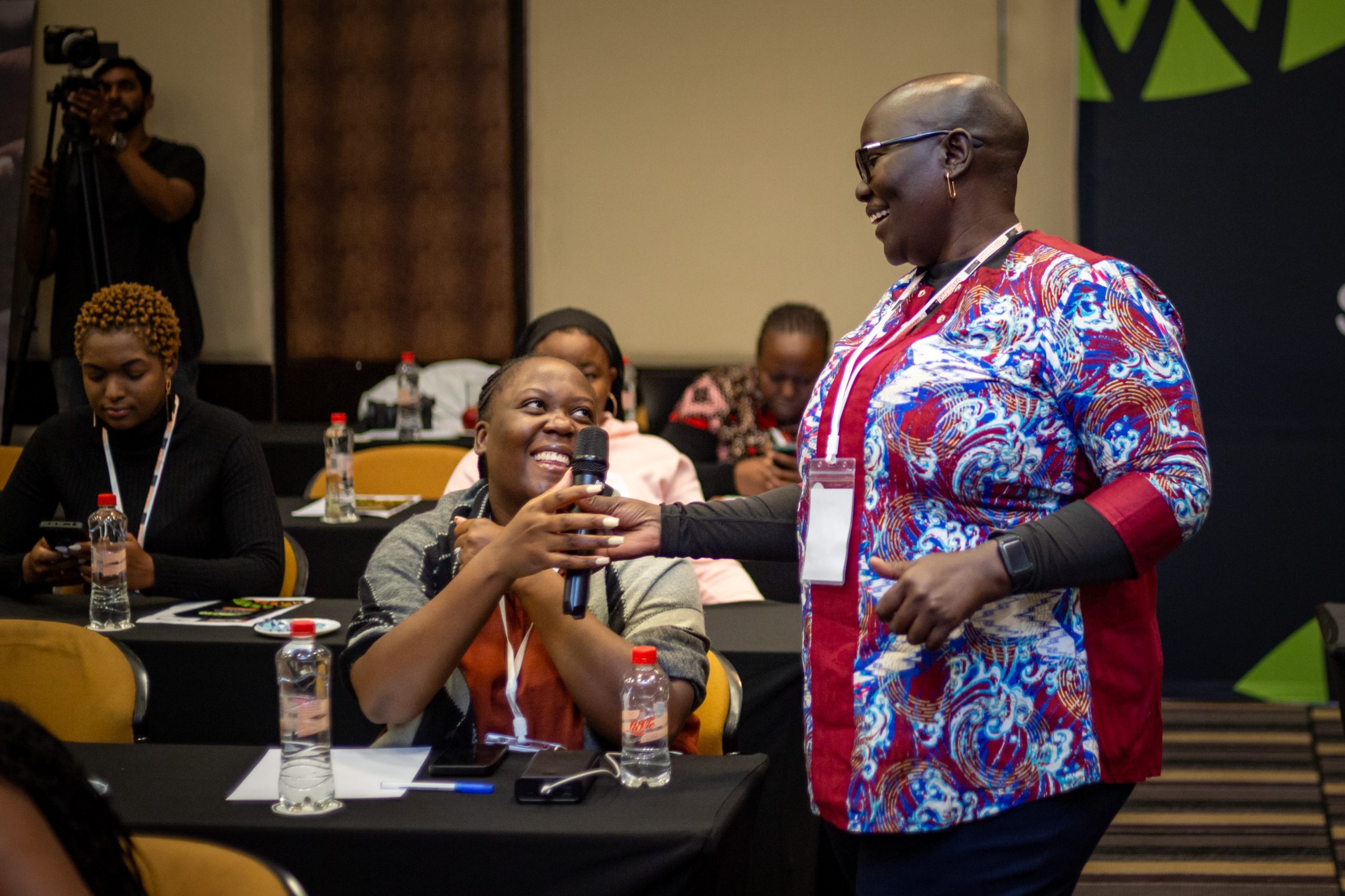
stp_dariro_1_0_day_02_session_01_0017_st
Knowledge Hub

Dariro 1.0 Synthesis Report | Civic Futures, Human Rights & Feminist Organising in Southern Africa

In November 2025, the Southern Africa Trust convened Dariro 1.0 — bringing together human rights defenders, feminist organisers, youth climate leaders, artivists, and media actors from across Southern Africa with a clear purpose: to collectively map the forces reshaping the region’s civic landscape, build shared foresight, and co-create strategies for defending and advancing civic space over the next five years.

That work has only become more urgent. Civic space across Southern Africa — and globally — continues to contract. Aid cuts are reshaping what civil society organisations can do and who gets to do it. Anti-gender movements are gaining ground. Democratic backsliding is accelerating across the SADC region. And the communities most affected by shrinking civic space are still the least resourced to respond.

Against this backdrop, the Dariro Scenario Skills Labs created something rare: a structured, participatory space for civic actors to step back from immediate pressures and think collectively about the futures they want to build. Across three thematic labs — the Future of Human Rights Defence, the Future of Women’s Rights and Feminist Organising, and Youth and Climate Futures in Africa — participants mapped systemic realities, explored possible and preferred futures, and designed concrete pathways from 2025 to 2030.

What emerged was not a wish list. It was a roadmap. Participants called for community-rooted funding models to replace shrinking donor pipelines. They named digital safety and protection from surveillance as non-negotiable infrastructure for human rights defenders. They demanded feminist movements across Southern Africa be recognised as governance actors, not just advocacy voices. And they insisted that youth climate leadership move from tokenism to institutionalised power — in national councils, in regional bodies, and in climate financing systems.

These are not distant ambitions. As 2026 deepens the pressures that Dariro anticipated, this report is a living resource — a foundation for the coordinated, anticipatory, justice-centred civil society action that this moment demands.

Read it. Share it. Build on it.
Download Report

3 (1)
Knowledge Hub

Security Provision and Governance in Fragile Resource-Rich Settings

The Southern Africa Trust funded this research by partner Good Governance Africa, conducted in July 2025, to examine mining governance in Zambia’s Northwestern Province as the region emerges as Africa’s “New Copperbelt”—central to national targets to substantially increase copper production over the next decade.

Through stakeholder engagements and community consultations in Solwezi and Kalumbila, the study reveals a critical gap between Zambia’s well-developed legal frameworks and their implementation on the ground. While the country has introduced progressive mining legislation, including mandatory Community Development Agreements and digital mining cadastre systems, regulatory institutions remain severely under-resourced and understaffed, undermining enforcement capacity. Environmental governance failures have led to heavy metal contamination in the Solwezi and Kifubwa Rivers, with severe downstream impacts on livestock, crops, and livelihoods.

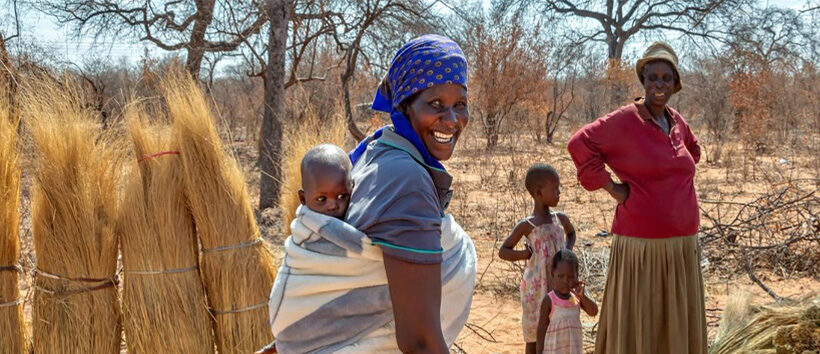
The research exposes how mining’s impacts are experienced unequally within host communities. Women participants described carrying a disproportionate burden as environmental degradation intensifies their unpaid labour—fetching water now requires longer distances, while farming on contaminated land has become harder. The influx of predominantly male workers was linked to increased gender-based violence, rising sex work, and higher rates of sexually transmitted infections, while girls’ education suffers from household poverty and caregiving responsibilities.

Despite challenges, the study identifies promising models like the Barrick Lumwana Trust, governed by traditional leadership and community-elected representatives, whose investments in education, health, and income-generating activities align more closely with local priorities. The research demonstrates that while Zambia’s unitary tax system weakens the link between mining activity and local development, intentional governance reforms—strengthening regulatory capacity, institutionalising meaningful Free Prior and Informed Consent, and integrating gender-responsive indicators—can transform mining from a source of inequality into genuine societal transformation.

Read More

cover-3
Knowledge Hub

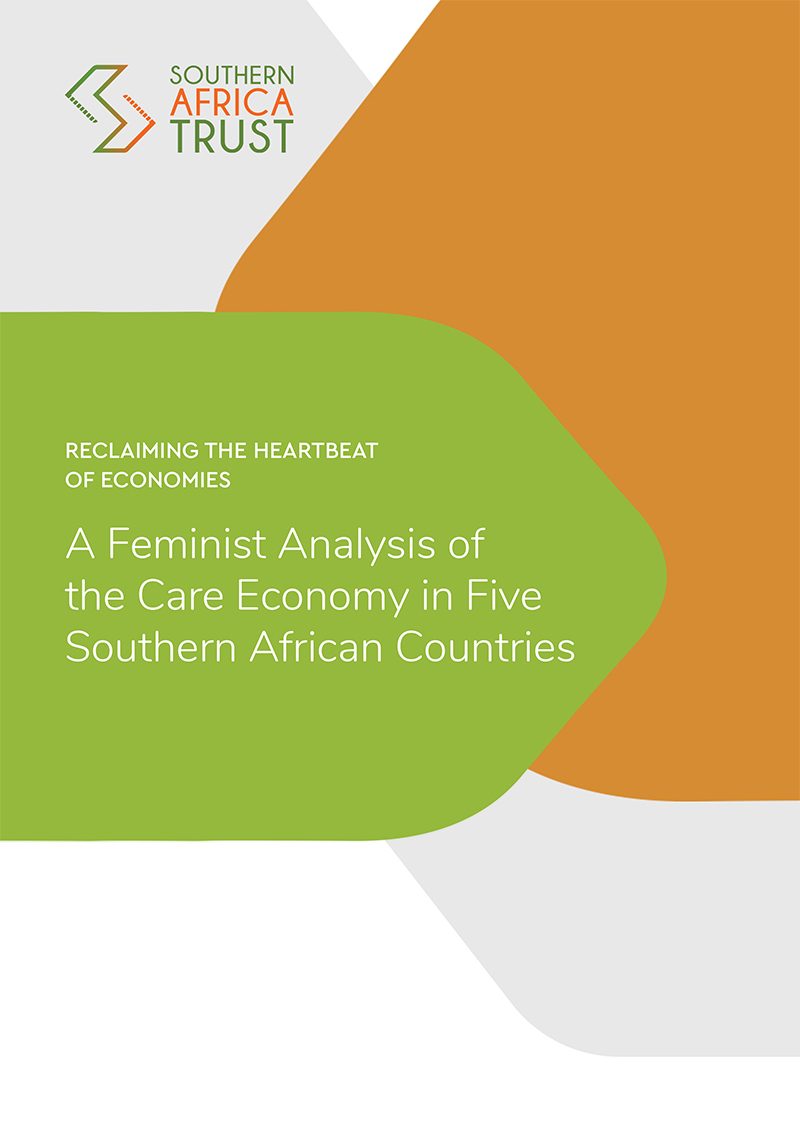
A Feminist Analysis of the Care Economy in Five Southern African Countries

This report presents the findings of a feminist political economy analysis of the care economy in Malawi, Mozambique, South Africa, Zambia, and Zimbabwe. The study examines eight intersecting challenges: economic exclusion, infrastructure gaps, the informalisation of care work, climate change, migration, social protection, the impact of COVID-19, and shifting political landscapes. The challenges demonstrate that care work is crucial and should be tracked and incorporated into the development agendas of the five countries.

Grounded in feminist values and care justice principles, the research employed both qualitative and quantitative methods to capture the lived realities and structural dynamics that shape care. Sixty in-depth Key Informant Interviews (KIIs) were conducted with individuals across social classes and institutions, purposely selected for their insights into the policies and practices surrounding unpaid care. Quantitative data was collected through face-to-face household surveys led by in-country feminists, with carefully selected and representative samples that allowed for cross-country generalisability.

Read More

an_analysis_of_poverty_and_inequality_in_southern_africa_during_a_global_pandemic-1
Knowledge Hub

An Analysis of Poverty and Inequality in Southern Africa During A Global Pandemic

The Southern African region has over the past few years struggled to sustainably reduce its level of poverty and inequality. Inequalities along class, race, and gender continue to characterise the access and control over both productive and reproductive assets in the region. The global COVID-19 pandemic has worked to worsen poverty and inequality in Southern Africa.

Existing social safety nets and welfare programmes, policies, and practices were unprepared and not effective in protecting the most vulnerable populations. Responses across various stakeholders tended to be responsive, with early warning systems and disaster management (including risk reduction efforts), similar to global trends, were largely inadequate.

Download Policy Brief